Master modern infrastructure, automation, and scalable software delivery with our Advanced DevOps program. This course is designed to help you build real-world DevOps expertise by working with industry-standard tools and production-ready workflows used by top engineering teams.Learn how to design and manage CI/CD pipelines, automate deployments, work with containers using Docker, orchestrate applications with Kubernetes, and deploy scalable infrastructure on cloud platforms like AWS. Gain hands-on experience with monitoring, logging, infrastructure automation, and DevOps best practices that power high-performing systems.Beyond the fundamentals, explore how AI-driven automation, intelligent monitoring, and modern DevOps practices are shaping the future of software engineering. Whether you're a student, developer, or working professional, this program will help you strengthen your practical skills, improve deployment confidence, and prepare for real-world DevOps roles.

Yadnesh Nikam
Advance

Advanced SRE & Reliability Engineering Skills
Incident Management & Root Cause Analysis
High Availability & Scalability Practices
Real-World Production Simulations
Monitoring, Logging & Observability Mastery
Automation & Infrastructure Reliability
Kubernetes & Distributed Systems Handling
Performance Optimization & System Resilience
Mentorship from Industry Experts
Future-Ready Reliability Engineering Skills
Site Reliability Engineering (SRE) Teams
Cloud & Infrastructure Operations
DevOps & Platform Engineering
Large-Scale Product Companies
AI Infrastructure & AIOps
Enterprise Systems & Reliability
Security & Reliability Operations
Startups & High-Growth Tech Companies
Freelancing & Remote Infrastructure Consulting
Site Reliability Engineer (SRE)
Production Support Engineer
Platform Reliability Engineer
Cloud Reliability Engineer
Infrastructure Automation Engineer

Site Reliability Engineering (SRE) is your gateway to building highly reliable, scalable, and production-ready systems capable of handling real-world traffic, failures, and operational challenges. This comprehensive program is designed to help you master modern reliability engineering practices used by top tech companies to maintain high availability, performance, and system resilience at scale.
You'll begin by understanding the foundations of Linux, networking, cloud infrastructure, and automation before diving deep into containerization with Docker and orchestration using Kubernetes. From there, you’ll explore advanced monitoring and observability tools like Prometheus, Grafana, ELK Stack, and OpenTelemetry to gain complete visibility into distributed systems and production environments.
As the course progresses, you’ll learn how to manage incidents, perform root cause analysis (RCA), implement SLIs, SLOs, and SLAs, automate infrastructure operations, and improve system reliability through scalable architecture and proactive monitoring. You’ll also explore modern AIOps practices, intelligent alerting systems, automated remediation, and AI-driven reliability engineering workflows shaping the future of cloud operations.
Through hands-on labs, production-grade projects, real incident simulations , and expert mentorship, you’ll gain practical experience working with highly available systems, deployment strategies, infrastructure automation, and reliability-focused engineering workflows used across modern organizations.
By the end of the course, you’ll have the technical expertise, operational mindset, and real-world confidence to excel as a Site Reliability Engineer (SRE), Platform Engineer, Cloud Reliability Engineer, DevOps Engineer, or Infrastructure Specialist across startups, SaaS platforms, enterprise systems, and large-scale tech companies.
With a structured curriculum, real-world infrastructure challenges,, and industry-focused guidance, this program is built to make you a future-ready engineer capable of designing, managing, and scaling resilient systems in the era of cloud-native and AI-powered operations.


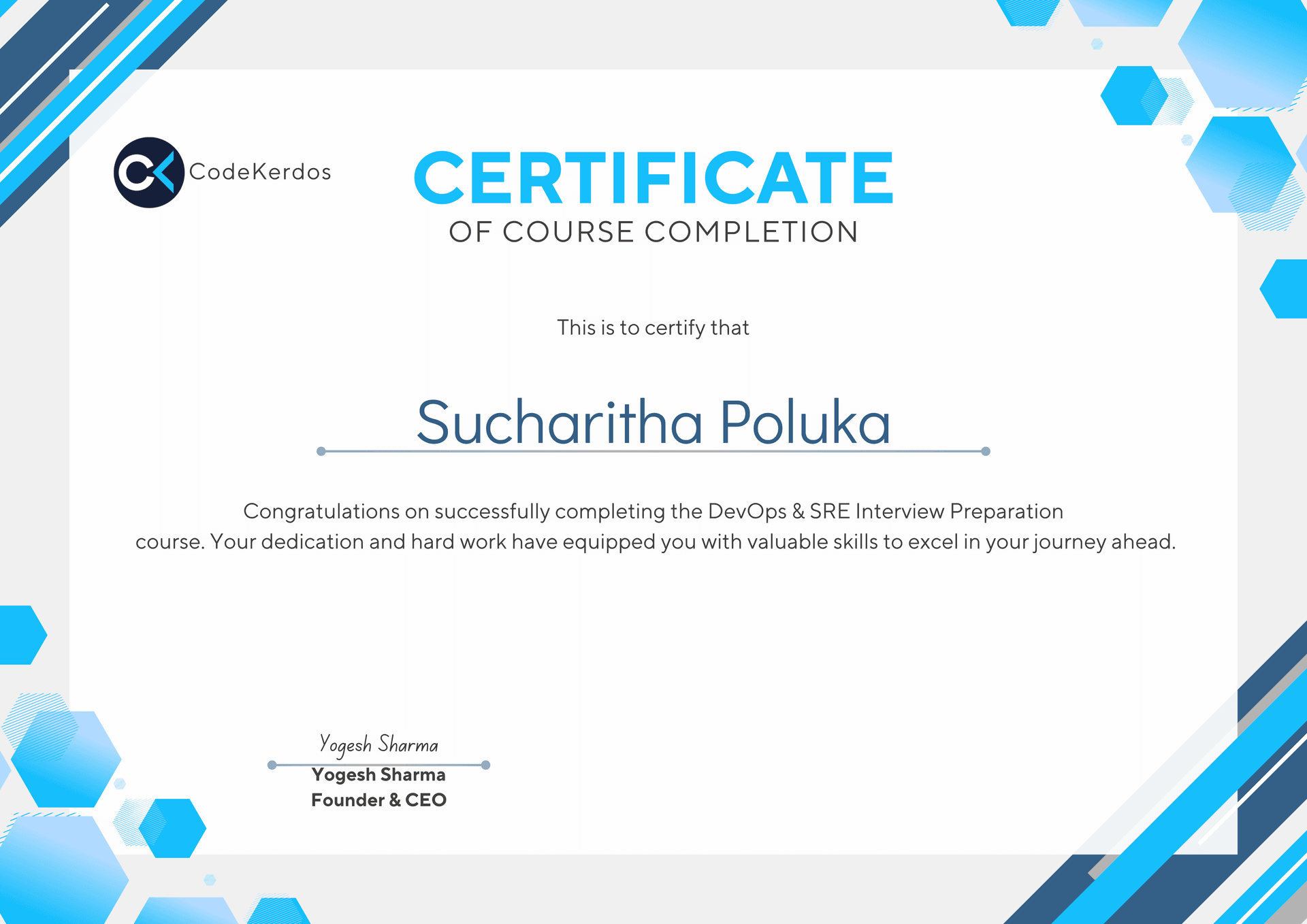

Sucharitha Poluka
Senior DevOps Engineer
+211%
Salary Hike
Software Engineer Sr DevOps Engineer
"Moving from dev to a senior DevOps role at a global enterprise was seamless thanks to the deep dive into Kubernetes, CI/CD and GitOps practices."

Parag Telang
SR. SRE @ MASTERCARD
+144%
Salary Hike
Devops Engineer Sr. SRE
"A well-structured DevOps & SRE program with excellent hands-on labs, real-world troubleshooting, and interview preparation. It helped me sharpen my cloud, Kubernetes, CI/CD, and SRE skills, contributing to my transition to a Senior SRE role at Mastercard."
Join our hands-on SRE Bootcamp and work on real-world cloud-native and AI-powered reliability engineering projects designed for modern production environments. Gain practical experience with Kubernetes, cloud platforms, observability tools, infrastructure automation, incident management, and intelligent monitoring systems while building scalable, resilient, and production-ready systems used by leading tech companies.
Deploy a PHP-based e-commerce application on Ubuntu with Apache, MariaDB and Linux service, networking and security configuration.
Build a Bash-based Linux monitoring utility that collects system metrics, monitors services and processes, and generates automated reports and alerts.
Build a Bash-based deployment automation tool that updates Kubernetes deployment manifests in a Git repository and creates a Pull Request for application releases.
Design and deploy a highly available, fault-tolerant 3-tier e-commerce platform on AWS with automated scaling, load balancing, private networking and a managed relational database.
Discover all the essential information about our courses in our detailed brochure. Get insights on curriculum, schedules, and enrollment options to help you make the best choice for your education.
Master modern Site Reliability Engineering by learning Linux, cloud infrastructure, Kubernetes, observability, automation, incident management, and production reliability practices. Gain hands-on experience with real-world infrastructure, monitoring systems, scalable deployments, and AI-powered operational workflows used by modern tech companies.

Flexible monthly EMI plans available for up to 24 months.

Explore the various modes of payment available today: UPI for instant transfers, cards for secure transactions, wallets for convenience, and net banking for easy online management. Each option offers unique benefits to suit your needs.
Final pricing refers to the last and definitive cost of a product or service, including all applicable fees and discounts.
Includes: